
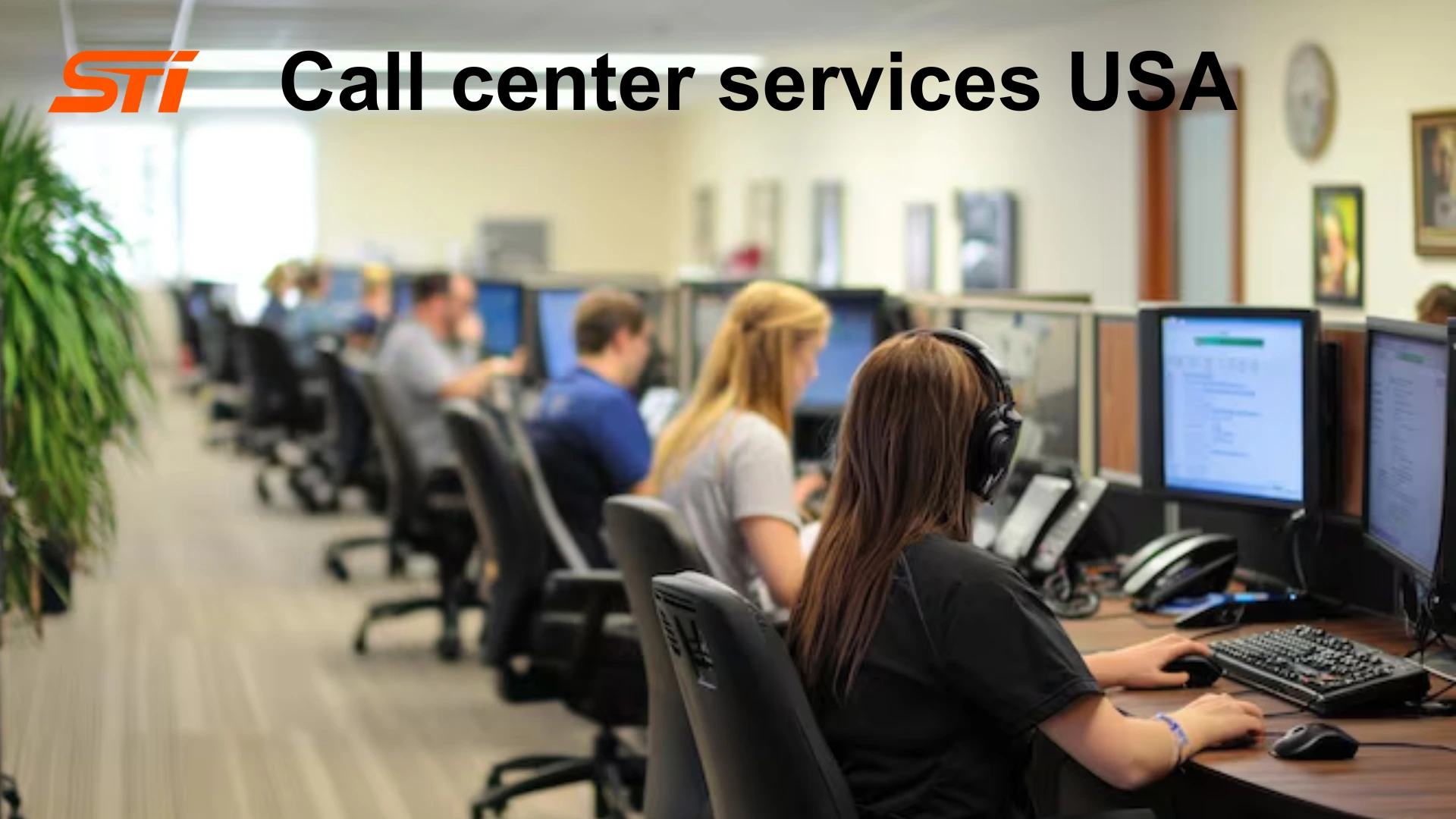
By Sales Tech Innovations
Every growing business eventually hits the same wall. Calls pile up, emails sit unanswered overnight, and the people who should be building the product or closing deals end up babysitting the phone line. At that point the question changes from “do we need phone support?” to “who should handle it?”
That is where call center services USA companies depend on come into the picture. Whether you run a small clinic in Florida, an online store shipping across the country, or a software company with customers in six time zones, a well-run contact team can protect your reputation and give your own staff room to breathe.
This guide explains the topic in plain language. You will learn what these services include, what they cost, which rules you must respect, and how to choose a partner without regretting it six months later. It is written for business owners and managers, not call center veterans, so you will not need a glossary to follow along.
What Are Call Center Services?
A call center service is an arrangement where trained agents talk to your customers or prospects on your behalf. They might answer incoming questions, chase down new leads, book appointments, or troubleshoot a product. The agents can sit in a dedicated office, work from home, or be spread across several locations.
In the United States, the term usually covers two broad models. The first is an in-house operation, where you hire, train, and manage the team yourself. The second is outsourcing, where a specialist provider supplies the people, the phone systems, and the day-to-day supervision while you set the goals and approve the scripts.
You will also hear the phrase “contact center” used almost interchangeably. There is a small difference. A traditional call center focuses on voice. A contact center handles voice plus email, live chat, text messages, and social media. Most modern providers now offer the second version even if they still use the older name on their website.
Why Do Businesses Outsource Their Calls?
Cost is the reason people mention first, but it is rarely the only one. Building a support team from scratch means recruiting, training, buying software, renting space, and managing schedules. That is a full-time job on its own. Outsourcing turns most of that into a monthly service fee.
Coverage is another big driver. Customers expect an answer outside nine-to-five. A single in-house team cannot easily cover nights, weekends, and holidays without burning people out. A provider with a larger headcount can spread shifts so someone is always available.
Scalability matters too. Imagine a retailer heading into the holiday rush. Call volume might triple for six weeks and then fall back. Hiring permanent staff for a temporary spike is wasteful, while outsourcing lets you scale up and down with the calendar.
Finally, there is focus. Founders who spend their afternoons resolving billing questions are not spending those hours on strategy. Handing routine conversations to a capable partner lets your core team work on what only they can do.
Which Services Can You Get?
The menu is wider than most first-time buyers expect. Here are the main categories you will run into.
Inbound customer service. Agents answer questions about orders, accounts, returns, and general inquiries. This is the backbone of most outsourcing contracts.
Technical support. Tier-one agents walk customers through basic troubleshooting, while more complex issues get escalated to your engineers. Good providers document every escalation so nothing falls through the cracks.
Outbound sales and cold calling. Agents contact prospects, qualify interest, and pass warm leads to your sales team. This works best when the script is tested and the target list is clean.
Appointment setting. Common for clinics, home service companies, law firms, and B2B sellers. The agent’s only job is to fill your calendar with people who actually show up.
Email and chat support. Written channels suit customers who dislike phone calls, and they let one agent handle several conversations at once.
Customer success and retention. Instead of waiting for problems, agents check in with existing customers, gather feedback, and flag accounts that look ready to leave.
Specialized back-office work. Some providers also handle tasks such as medical billing follow-up, order entry, or data verification. Sales Tech Innovations, for instance, lists medical billing alongside its customer support, inbound and outbound sales, and appointment setting offerings, which shows how far the category has stretched beyond simple phone answering.
Onshore, Nearshore, or Offshore?
Location shapes price, quality, and customer perception more than almost any other decision.
Onshore means agents based in the United States. Callers hear familiar accents and cultural references, agents understand local regulations, and time zones line up with your customers. The trade-off is a higher hourly rate.
Nearshore usually refers to Latin America, Canada, or the Caribbean. Time zones overlap well with American business hours, many agents are bilingual in English and Spanish, and prices sit between onshore and offshore.
Offshore points to countries such as the Philippines and India, where labor costs are considerably lower and large English-speaking workforces exist. The savings are real, but you may face time-zone gaps, heavier training needs, and in some cases customer frustration if communication feels stiff.
There is no universal winner. A company selling low-priced consumer goods might happily go offshore for tier-one questions. A healthcare group handling patient information or a financial firm dealing with account details often leans toward onshore support for trust and compliance reasons. Many businesses blend the two, keeping sensitive or high-value calls onshore and sending routine volume elsewhere.
How Much Does It Cost?
Published guides give a fairly consistent picture, though exact numbers change from one provider to another. As a rough guide for 2026, onshore U.S. agents commonly bill somewhere between the high twenties and mid forties of dollars per hour. Nearshore teams often land in the teens to low twenties, and offshore teams frequently run from around eight to sixteen dollars. Treat these as ballpark figures, not quotes. Industry, language, call complexity, and contract length all move the needle.
Providers also bill in different ways:
- Per hour. You pay for each agent hour whether the phone is ringing or not. This suits steady, predictable volume.
- Per minute. You pay only for talk time, which helps if call volume swings up and down. Rates commonly fall around fifty cents to a dollar and a half depending on region and complexity.
- Per call or per resolution. Cost stays predictable, but complicated calls can make providers cautious.
- Performance-based. Common in sales campaigns, where part of the fee depends on appointments booked or deals closed.
The sticker price is only half the story. Ask about setup fees, training charges, minimum monthly commitments, software licenses, overtime, and holiday surcharges. A quote that looks cheap can balloon once these extras appear. A smart approach is to convert every proposal into a single monthly total based on your real call volume, then compare those totals side by side.And remember what an in-house team really costs. Salaries are only the start. Benefits, payroll taxes, equipment, software, management time, and turnover all add up, which is why many companies find outsourcing cheaper even at onshore rates.

Which Industries Use These Services Most?
Almost any business that talks to customers can benefit, but a few sectors lean on outside call teams heavily.
Healthcare organizations use them for appointment reminders, patient intake, and billing questions. E-commerce brands rely on them for order tracking, returns, and product questions. Insurance and finance firms use agents for claims intake, policy questions, and lead qualification. Software and SaaS companies outsource onboarding calls and first-line technical help. Home services such as roofing, plumbing, and HVAC use answering teams so no emergency call goes to voicemail. Real estate offices use them to respond to new inquiries within minutes, when interest is highest.
The common thread is timing. In each of these fields, a missed call is often a lost customer, because the person simply dials the next business on the list.
What Rules Do You Need to Follow?
This is the part many buyers skip, and it is the part that can cost real money. Operating in the United States means following several overlapping rules, and a good provider should know them well. Always confirm current requirements with a qualified attorney, because regulations change.
Telephone Consumer Protection Act (TCPA). This federal law restricts automated dialing, prerecorded messages, and unsolicited text messages. Marketing calls generally require proper consent, and violations can lead to expensive penalties.
Do Not Call rules. Outbound campaigns must respect the National Do Not Call Registry and any internal do-not-call lists. Several states add their own telemarketing rules on top.
HIPAA. If agents touch patient information, the provider must safeguard it and typically sign a business associate agreement with you.
PCI DSS. Taking card payments over the phone requires strict handling of payment data. Many centers use secure payment tools that keep card numbers away from agents entirely.
Call recording laws. Some states require consent from only one party, while others require everyone on the call to agree. Providers working nationwide need a clear policy for this.
When you interview providers, ask how they train agents on these rules, how they audit calls, and what happens if a compliance problem appears. Vague answers are a warning sign.
How Is Technology Changing the Industry?
The call center of ten years ago looked like rows of headsets and a wall-mounted queue display. Today the picture is quite different.
Artificial intelligence now handles a growing share of routine work. Virtual assistants can answer common questions, route callers, and transcribe conversations. Rather than replacing people outright, the better providers use AI to take over repetitive tasks so human agents can focus on emotional, complicated, or high-value conversations.
Remote and hybrid teams have become normal. Agents working from home widen the hiring pool and make it easier to staff odd hours, though providers must prove they can keep data secure outside a traditional office.
Omnichannel support lets customers start on chat and continue by phone without repeating themselves. When the systems share one customer record, the experience feels smooth instead of scattered.
Analytics turn conversations into useful data. Sentiment tracking, call scoring, and trend reports show you why customers call, which products cause confusion, and where your own website or policies could be clearer.
When evaluating a provider, ask how they use these tools in practice. Slick demos are easy. Consistent results are harder.
How Do You Choose the Right Partner?
Start by writing down what success looks like. Maybe it is answering ninety percent of calls within thirty seconds, or booking twenty qualified appointments a week, or cutting abandoned calls in half. Without a target, every proposal sounds equally good.
Then work through this checklist:
- Check experience in your industry. A team that already understands your customers needs far less training time.
- Listen to real calls. Ask for recordings or a live monitoring session. Tone and problem-solving ability show up quickly.
- Ask about agent turnover. High churn means constant retraining and inconsistent service.
- Review reporting. You should receive clear, regular numbers on volume, wait times, resolution rates, and customer satisfaction.
- Examine security practices. Ask about access controls, data storage, and any certifications relevant to your field.
- Understand contract terms. Look for reasonable notice periods and the freedom to adjust volume.
- Run a pilot. A short trial with a small team reveals more than any sales presentation.
If comparing dozens of providers sounds exhausting, an advisory approach can help. Sales Tech Innovations, for example, positions itself as a guide that helps businesses find suitable agencies in the US, Europe, Asia, South Africa, and Latin America, and says its consultations are free. Whichever route you take, insist on seeing evidence, not just promises.
What Mistakes Should You Avoid?
A handful of errors show up again and again.
Choosing on price alone. The cheapest bid often comes with thin training and high turnover. Cost per resolved issue is a better yardstick than cost per hour.
Skipping the onboarding work. Providers can only be as good as the information you give them. Share product details, tone guidelines, escalation paths, and frequently asked questions before launch.
Treating the team as outsiders. Agents who never hear about new products, price changes, or promotions will give outdated answers. Keep them in the loop like any other department.
Ignoring the data. Monthly reports are a goldmine. If you never read them, you are paying for insights you do not use.
Setting unrealistic scripts. Rigid scripts make conversations sound robotic. Give agents a framework and the freedom to respond like humans.
Final Thoughts
Good phone and chat support is not a luxury anymore. It shapes whether customers trust you, come back, and recommend you to others. Choosing the right call center services in the USA comes down to a few honest questions: what do you need to handle, how sensitive is the information involved, what budget makes sense, and who can prove they will treat your customers the way you would.
Take your time, compare totals instead of hourly rates, test before you commit, and keep communication open after launch. Do that, and an outside team can feel like a natural extension of your own.
FAQs
How much do call center services cost in the USA?
Most onshore providers charge roughly between the high twenties and mid forties of dollars per agent hour, while per-minute pricing often falls between about fifty cents and a dollar and a half. Final cost depends on call complexity, industry, volume, and contract length, so request itemized quotes.
What is the difference between a call center and a contact center?
A call center mainly manages voice calls. A contact center covers voice along with email, chat, text messaging, and social media, giving customers more ways to reach you.
Is it better to choose a US-based or offshore provider?
Neither is always better. U.S.-based teams offer cultural familiarity, easier compliance, and aligned time zones, while offshore teams cost less. Many businesses split work, keeping sensitive calls onshore and routine tasks offshore.
Can a small business afford outsourced call center services?
Yes. Many providers offer part-time coverage, shared agents, and per-minute plans, so a small company can pay only for the support it actually uses instead of hiring a full team.
How long does it take to get started?
Simple answering services can launch within days. Larger programs with custom scripts, software integration, and agent training usually take a few weeks. A pilot phase helps you catch issues early.
How do I know if the provider is following the law?
Ask for written policies on consent, do-not-call handling, call recording, and data protection, and ask how often calls are audited. Have your attorney review the contract, especially for regulated fields such as healthcare and finance.